A3, Phase I, Vatva GIDC Ahmedabad, Gujarat|GST: 24AAKPP6075E1ZL

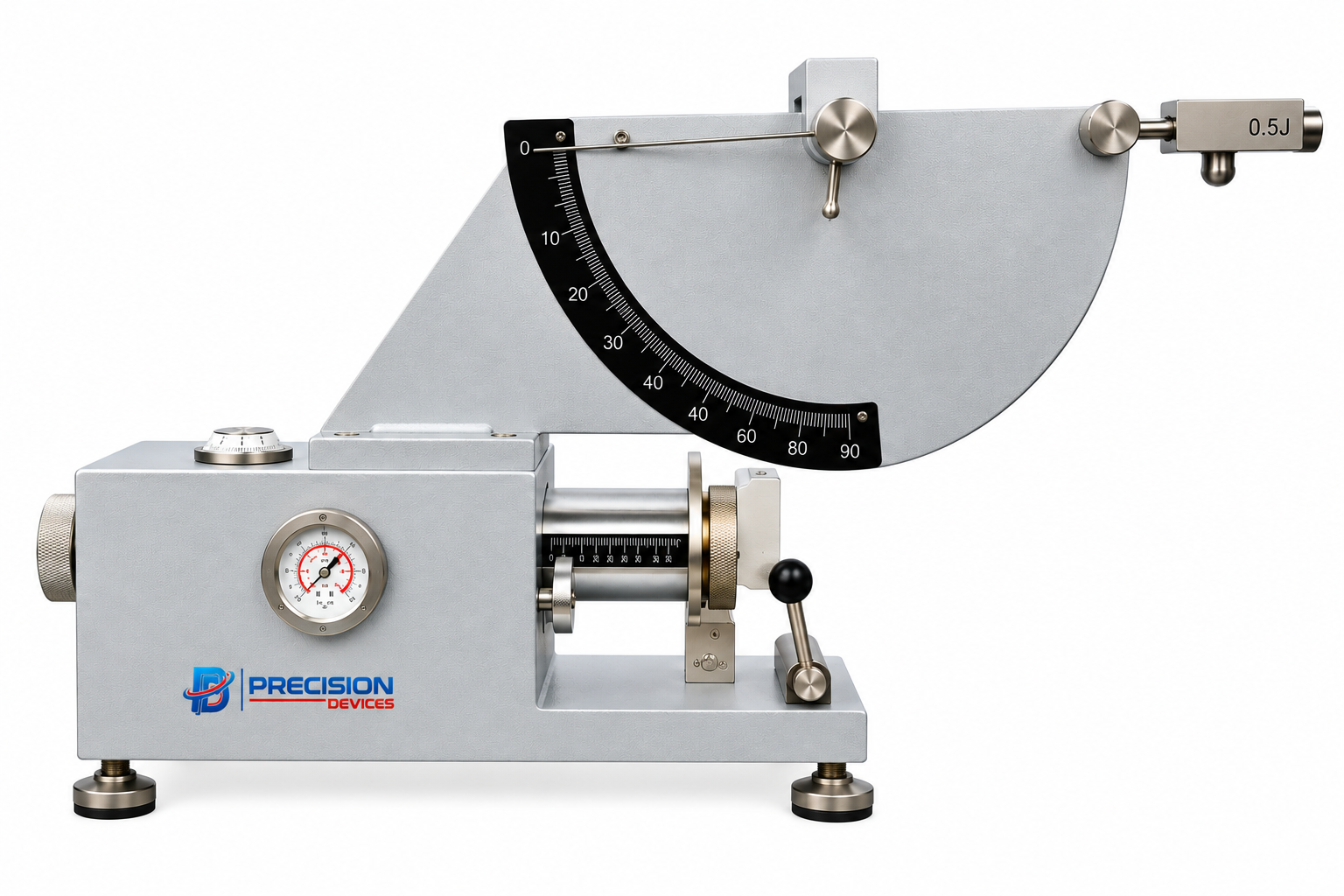
The Rebound Resilience Tester measures the elasticity of rubber and elastomeric materials by recording how much impact energy the specimen returns, a key indicator of elastic behavior and energy loss.
Applicable Industries
Our engineering team typically responds within 24 hours.
The Rebound Resilience Tester is a laboratory testing instrument designed to measure the elasticity of rubber and elastomeric materials. A pendulum strikes the specimen and the rebound is measured, showing how much of the impact energy the material returns and how much it absorbs, which is a key indicator of elastic behavior and energy loss.
| Test Method | Rebound Resilience Test |
|---|---|
| Test Material | Rubber and Elastomeric Materials |
| Test Principle | Pendulum Impact and Rebound Measurement |
| Test Evaluation | Rebound Resilience (Energy Returned After Impact) |
| Specimen Mounting | Standardized Specimen Holder |
| Control System | Digital Monitoring |
| Test Configuration | Laboratory-Scale Resilience Testing |
The tester is used to evaluate the elasticity and energy-return behavior of rubber and elastomeric compounds, and to compare the performance of different formulations.
It supports evaluation of rubber soles, midsoles, and cushioning materials where energy return and shock absorption are important.
The instrument can be used to assess compounds and parts such as mounts, bushings, and vibration-damping components where resilience affects performance.
It helps assess the elastic behavior of rubber sheets, pads, rollers, and other industrial rubber products.
The tester is suitable for compound development, material comparison, batch-to-batch consistency checks, and routine quality control testing.